
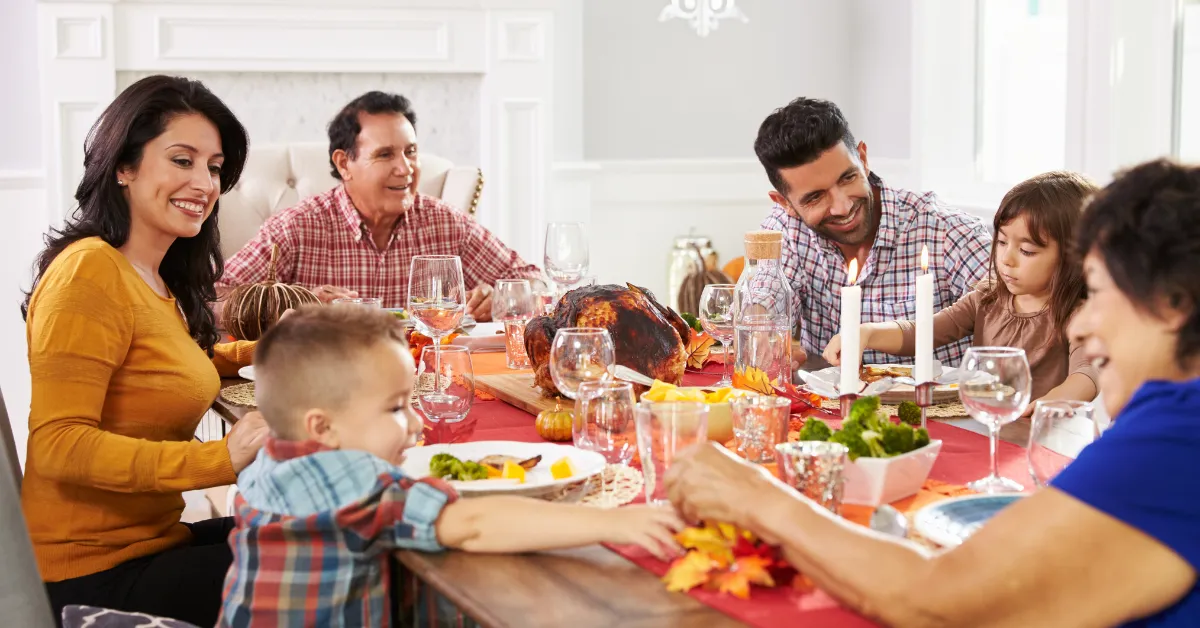
Helping your child switch to family-style meals is a powerful way to support their independence and build lifelong healthy eating habits. By encouraging kids to serve themselves, choose what to eat, and participate in the process, families create a low-pressure environment that fosters better self-regulation, food exploration, and mealtime connection.
Letting toddlers serve themselves at mealtimes may feel like a recipe for spills, but it's actually a powerful way to build lifelong healthy eating habits. Family-style meals offer kids a sense of control, boost important developmental skills, and encourage a positive relationship with food—all without pressure.
In this blog:
Family-style dining might seem like a small shift, but it can have a big impact. Instead of portioning out each plate, the meal is served from shared dishes at the table. Everyone helps themselves. This setup supports Ellyn Satter’s Division of Responsibility in Feeding—a trusted approach where parents decide what, when, and where food is offered, and children decide whether they'll eat and how much.
If you're dealing with a child who doesn’t want to eat, this framework takes pressure off the table. It also encourages kids to stay connected to their natural cues for hunger and fullness.
When children serve themselves, they’re doing more than just choosing food—they’re building valuable life skills.
The simple act of scooping food onto their plate supports both practical development and self-awareness.
Quick Tip: Let toddlers use small serving utensils to build fine motor confidence at their pace.
Compared to meals where plates arrive already filled, family-style dining helps kids move away from the "clean-your-plate" mindset. Instead, they learn to listen to their bodies. It also takes the edge off fussy eating.
Encouraging participation at the table can gently expand their comfort with new flavors and textures.
Here’s what kids can gain from being involved in this way:
The influence of shared meals stretches far beyond just nutrition. Studies show that kids and teens who eat with family regularly often report better mental health and stronger relationships.
For example, teens who join family dinners five to seven times a week are less likely to engage in risky behaviors, according to research from CASAColumbia. Other studies published in Pediatrics found that frequent shared meals are linked with healthier habits and improved overall diets.
And when meals are planned to include balanced, nourishing choices like those found in our meal plans for toddlers, kids, and older children, it further supports your child's growing sense of independence and confidence around food.
You don’t need to do a complete overhaul to start family-style meals. A single shared dinner each week is a great first step. Try beginning with a relaxed weekend evening.
Parent Tip: Start with your child’s favorite meal to make the switch feel fun, not forced.
Use encouraging language to bring some excitement to the change. Saying something like, “Tonight, we’re all eating together like a team!” can make your child feel valued and grown-up—two things that go a long way at the table.
When kids help make the meal, they’re more likely to eat it. Involving children in cooking activities is a wonderful way to expand their food choices naturally.
Even small tasks can go a long way:
According to research in the Journal of the Academy of Nutrition and Dietetics, children who help with prep—especially salads—tend to eat more veggies.
It’s a good idea to include at least one item at the table that your child usually enjoys and feels comfortable eating. That way, they can still fill their belly—even if they’re not ready to try everything.
Some examples of “safe foods” might include:
Quick Tip: Kids often need 10 to 15 exposures before accepting something new.
Family-style dining makes that kind of gentle, repeated exposure easy and pressure-free.
If you’re looking for additional picky eating help, remember that staying consistent and patient makes a big difference.
Try offering the meal in parts, rather than all mixed together. This “deconstructed” approach gives kids a better idea of what’s in their food and lets them build their plate in a way that feels safe.
Instead of serving tossed pasta, offer plain noodles, sauce, cheese, and chicken in separate bowls.
This format offers choice without creating stress and keeps them engaged while boosting confidence in trying new things.
The way you talk about food can shape your child’s approach to eating. Avoid bribes or praise that places too much attention on what—or how much—they eat. Instead, focus on providing a peaceful setting.
The American Academy of Pediatrics advises not to pressure kids to clean their plates, and not to label foods as “good” or “bad.”
Let meals be calm and consistent. Over time, promoting a positive relationship with food will happen more naturally.
Meals are about far more than filling stomachs. They’re an opportunity to bond and build meaningful routines.
Quick Tip: Try “Build Your Own” meals to give toddlers choice and keep things fun.
To guide conversation and spark joy, try these questions at the table:
These small moments build positive memories around food and create a strong family rhythm.
Kids thrive when they have equipment that’s right for their size. These helpful tools support their growth and reduce mealtime stress for everyone.
Consider introducing some of these items to boost their independence:
It's completely normal to worry about waste when little ones begin serving themselves. Start by encouraging small portions. Let them know they can always go back for more.
This sets the stage for mindful eating and teaches valuable lessons about respecting food.
If your child only serves up bread or plain pasta—even when other options are available—you’re definitely not alone.
Parent Tip: Remember your role: serve balanced options, and let them decide what and how much to eat.
Stay calm and trust that you’re still making progress. Toddler appetites can vary wildly, so look at patterns over several days.
Need more ideas? Check out these picky eating strategies for help.
Spills are part of the learning process—and part of the fun. Rather than worrying about every little drop, try setting up in a way that makes cleanup easier.
These quick-prep ideas help things go smoothly:
Letting kids serve themselves might feel a little messy or unpredictable at first. But over time, it builds habits that last a lifetime: self-trust, curiosity, and confidence around food. And that’s a gift worth every crumb.
Written by: Vivian Castillo, MS, RD, CNSC – Registered Dietitian and clinical nutrition expert in pediatric care.
Sources:
Ellyn Satter Institute, "The Satter Division of Responsibility in Feeding"
American Academy of Pediatrics, "Picky Eaters"
The Center on Addiction and Substance Abuse at Columbia University (CASAColumbia), "The Importance of Family Dinners"
Van der Horst, K., "Involving children in meal preparation. Effects on food intake."
Journal of the Academy of Nutrition and Dietetics Hammons, A. J., & Fiese, B. H., "Is frequency of shared family meals related to the nutritional health of children and adolescents?"
United States Department of Agriculture, "Food Waste FAQs"
Centers for Disease Control and Prevention, "Toddler Nutrition"
11 months ago