
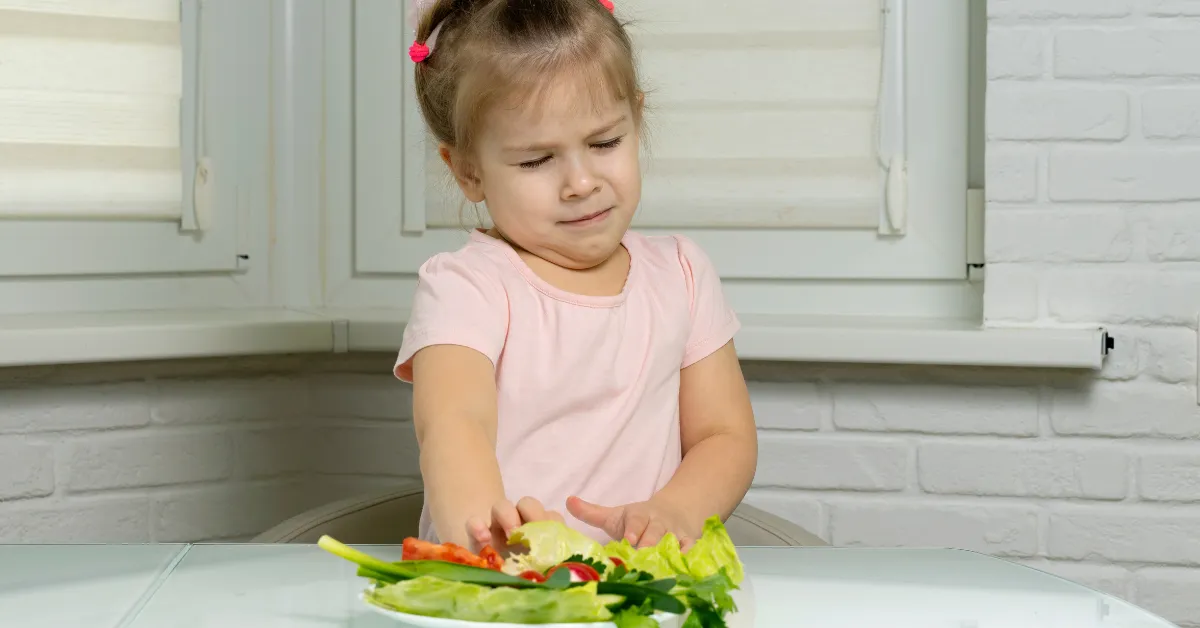
During the preschool years, many children go through “food jags”—phases where they insist on eating only one or two specific foods repeatedly. These behaviors are often driven by a natural developmental urge for autonomy, combined with biological sensitivities to taste, texture, and familiarity.
A food jag is when a young child wants to eat only one specific food—or just a few favorite foods—at every meal for several days or even weeks.
This strong food preference is different from picky eating or food neophobia (the fear of trying new foods). While they may look similar on the surface, knowing the differences can help you respond in the most helpful way. For example, a picky eater tends to avoid a range of foods consistently, while a child with a food jag becomes fixated on one familiar option. A neophobic child, on the other hand, might simply be hesitant to try anything unfamiliar. Understanding these patterns can offer some much-needed clarity.
In this blog:
Food jags happen most often in kids between the ages of two and six. During this stage, children begin to explore their independence, and meals quickly become one way they show it.
For growing toddlers, deciding what to eat (or not to eat) can feel like one of the few things they truly control.
You might recognize this in phrases like:
While it might leave you feeling stuck or worried, this behavior is actually very common and usually a part of normal development.
Quick Tip: Keep serving a variety of foods, even if your child doesn’t touch them. Familiarity is the first step toward acceptance.
If you’re wondering whether it’s okay for a toddler to eat the same thing every day, the good news is that many food jags are temporary. With supportive routines and consistent mealtime habits, most kids move past these phases on their own.
That said, if the food jag lasts several weeks—or begins to impact your child’s willingness to eat once-accepted foods—it might be worth speaking with your child’s pediatrician or a feeding specialist who can help guide your next steps.
Parent Tip: Look at how your child eats over an entire week, not just one meal. This gives a better picture of balance and variety.
Here are a few ways to support your child through a food jag without added stress:
Quick Tip: Try simple tweaks to your child’s favorite food, like cutting it in a new shape or presenting it differently.
Toddlers and preschoolers are learning how to assert themselves, and for many, mealtime becomes the perfect place to do so. The urge to make their own choices—even small ones—can show up in big ways at the table.
When your child insists on eating the same food over and over, it’s often less about the food itself and more about their need to feel in charge. They might not get to decide their bedtime or what to wear, but deciding what to eat? That’s all theirs.
Understanding this behavior as part of normal development can help you take some of the pressure off.
This growing need for control often comes right alongside food neophobia—a hesitance to try new foods. It’s not just pickiness or defiance; it's sometimes a built-in sensitivity.
In fact, researchers have found that food neophobia can be strongly influenced by genetics, with heritability as high as 78%.
Parent Tip: Give choices within structure—like “Do you want apple slices or cucumbers with lunch?”
Need more help handling picky eating? This guide offers expert reassurance and practical tips.
Many children interpret taste, smell, and texture far more intensely than adults. While we all have around 10,000 taste buds, young kids have them concentrated in a much smaller space—making flavors like the bitterness in vegetables feel way stronger.
That’s one reason they often resist foods like broccoli, even though they may warm up to them later in life. Being highly sensitive to these sensations can explain why older toddlers may get extra cautious about anything new, including certain textures.
Texture also plays a huge role. Kids tend to prefer foods that feel predictable—think smooth yogurt or crunchy crackers—because those textures don’t surprise them. On the other hand, "mushy" or mixed foods, like lumpy casseroles or stews, can feel confusing or unpleasant.
Their oral motor skills are still developing, too, so foods that feel tricky to chew or swallow might be automatically rejected.
Quick Tip: Serve tricky textures in small, separate servings to reduce overwhelm.
Sometimes, children experience intense reactions to certain textures, tastes, or smells that feel outside what’s typical. These may be tied to sensory processing differences.
If you notice any of the following, it might be time to check in with your child’s pediatrician or an occupational therapist:
About 5% of children may have sensory challenges that affect how they interact with food. If you feel unsure about what’s going on—especially if your child doesn’t want to eat—professional guidance can make a big difference.
Pressuring your child to take "just one more bite" can actually backfire. Instead, experts recommend creating a calm, low-pressure mealtime environment where kids feel free to explore food without expectations.
One approach widely used by feeding therapists is the Ellyn Satter Institute’s Division of Responsibility: Parents decide what, when, and where food is served. Children choose whether and how much to eat from what’s on the plate.
It’s a strategy that takes time and trust—but it works.
Kids may need to be exposed to a food 10 to 15 times (or more!) before they accept it. If your child doesn’t want to eat, staying gentle and consistent helps them feel safe enough to explore.
These science-backed ideas can help you support variety while honoring your child’s comfort and autonomy:
Parent Tip: Progress can be tiny—a lick, a smell, a touch. Celebrate it all.
By staying patient and sticking with a supportive, low-pressure routine, you’re helping your child build a confident, happy relationship with food—one bite (or even one tiny lick) at a time.
Written by: Vivian Castillo, MS, RD, CNSC – Registered Dietitian and clinical nutrition expert in pediatric care.
Sources:
HealthyChildren.org - "Picky Eaters"
Ellyn Satter Institute - "The Division of Responsibility in Feeding"
Journal of the American Dietetic Association - "The Effectiveness of the Division of Responsibility Approach"
Journal of the American Dietetic Association - "Food Neophobia and Its Association With Food Preferences in Children and Adults"
Journal of Human Nutrition and Dietetics - "Picky Eating in Children: Causes and Consequences"
11 months ago