
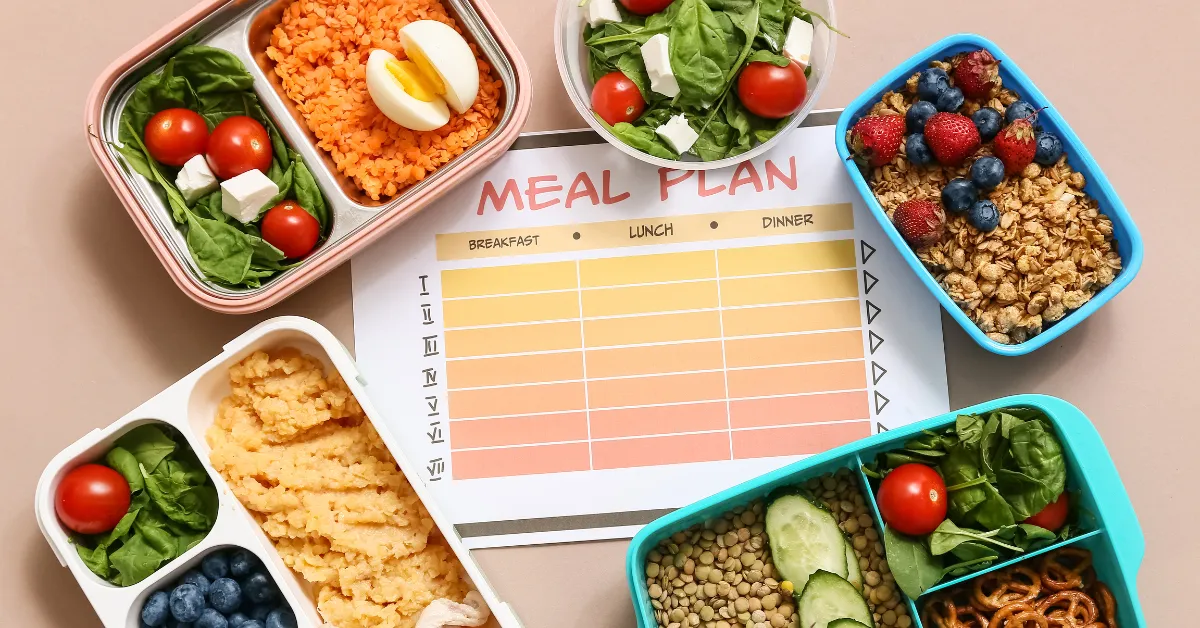
Portion sizes have drastically increased over the last few decades, making it harder for children to develop and trust their natural hunger and fullness cues. Helping your child self-regulate portion sizes involves supporting intuitive eating habits, fostering autonomy during meals, and using simple, visual tools that align with their nutritional needs and physical development.
Portion sizes in the U.S. have grown dramatically over the last few decades. What used to be considered a standard serving has ballooned—sometimes doubling or even tripling in size. This shift, often called portion distortion, makes it easy to lose sight of what an appropriate portion actually looks like. And while this change affects everyone, it can have a particularly strong influence on children.
Take french fries, for example. Years ago, a serving might have been around 2.4 ounces (about 210 calories). Today, it’s not unusual for that same “small” order to weigh in at 6.9 ounces (over 600 calories). Bagels, once a modest 3 inches wide, have doubled in diameter and calorie count. These supersized portions are more than just a visual change—they’re shaping how kids learn to interact with food.
As portion sizes grow, so does the tendency to eat past the point of fullness. Kids, like adults, tend to eat more when they’re served more. It’s not necessarily a lack of willpower—it’s human nature.
Research published in the American Journal of Clinical Nutrition found that preschoolers ate up to 25% more calories when presented with bigger portions of a main dish.
That’s why it can be confusing for caregivers trying to pin down how much food their child needs. Oversized servings can blur a child’s natural hunger cues and make it harder for them to know when they’re truly hungry or full.
Left unchecked, this pattern can shift the way children regulate their appetite, making them more accustomed to eating based on external cues—like what’s on the plate—rather than internal ones.
Quick Tip: Slow the pace of meals and help kids notice their fullness by pausing halfway through to check in.
There are many reasons behind rising childhood obesity rates, but consistently oversized portions play a role. According to the CDC, 19.7% of U.S. kids aged 2 to 19 were classified as obese between 2017 and 2020—that’s nearly 1 in 5 kids, or roughly 14.7 million children.
Teaching kids to recognize when they're satisfied—rather than when their plate is empty—is a powerful way to support healthy weight and lifelong habits. It starts with creating a home environment that encourages kids to listen to their bodies.
Here are some simple, practical ways to start:
Parent Tip: Try letting your toddler serve their own food with assistance—it encourages confidence and helps with portion control.
Helping kids tune into their internal cues starts with talking about what a balanced plate looks like and how food serves their bodies. Learning about portions isn’t about restriction—it’s about empowerment. These conversations help lay the groundwork for a healthy relationship with food.
Try these gentle shifts at home:
Kids are naturally good at sensing when they're hungry and when they’ve had enough. This built-in ability is part of what’s called intuitive eating. But adults often disrupt this process—without meaning to—by asking children to take "one more bite," distraction feeding, or using rewards like dessert to finish a meal.
You might wonder, “Is my child eating enough?” That’s a common thought. Still, research shows that pressure, restriction, or rewards can lead to disconnection from natural hunger cues and future eating struggles.
Instead of focusing on control, aim to create a supportive space that allows children to take the lead. Kids’ appetites vary, and changing appetites are a normal part of growing up.
Feeding expert Ellyn Satter developed a model called the Division of Responsibility in feeding. It’s a helpful framework that balances structure with freedom, giving parents and kids clear roles at the table.
As the parent, you’re in charge of:
Your child decides:
Quick Tip: Sticking with regular meal and snack times makes it easier for kids to self-regulate over the day.
Letting kids serve themselves during meals, also known as the family-style approach, gives them a sense of control and freedom. It also allows them to decide what—and how much—feels right for them.
Worried about whether they’re getting enough? That’s normal. But remember, they can ask for seconds if they’re still hungry.
Use everyday questions like, “Does your tummy feel full or does it want more?” to build body awareness.
If you’re ever in doubt, revisit how to tell if your child is eating enough.
Turning off screens during meals helps kids stay focused and connected to fullness.
When kids are present at the table, they’re more likely to feel satisfied and emotionally connected.
Using dessert to motivate eating often has the opposite effect.
Ways to keep dessert neutral and stress-free:
Kids thrive with simple, visual tools they can grow into—and remember. These reduce pressure while building awareness.
One of the easiest portion guides? Your child’s own hand.
Quick Tip: Their hand grows as they grow—perfect for adjusting portions over time.
Smaller plates help set expectations for appropriate portions—especially helpful for toddlers.
Divided plates make meals feel manageable—and balanced.
To help your child feel full, focus on foods high in protein, fiber, and healthy fats—these keep energy steady and reduce grazing.
Parent Tip: A child’s stomach is about the size of their fist—an easy guide when adjusting portions during growth spurts.
Supporting your child’s eating habits doesn’t mean getting it perfect. It means building trust, offering healthy options, and helping them feel safe and confident at the dinner table.
Written by: Vivian Castillo, MS, RD, CNSC – Registered Dietitian and clinical nutrition expert in pediatric care.
Sources:
Centers for Disease Control and Prevention (CDC) – "Childhood Obesity Facts"
National Heart, Lung, and Blood Institute (NHLBI) – "We Can! Portion Distortion"
National Center for Biotechnology Information (NCBI) – "Portion size and calorie intake"
American Journal of Clinical Nutrition – “Effects of portion size on intake in children”
Ellyn Satter Institute – "The Division of Responsibility in Feeding"
American Psychological Association (APA) – Study on parents’ feeding practices
Journal of the American Dietetic Association – Study on food as reward and food preferences
Cornell University – Research on plate size and calorie consumption
11 months ago